
Resident Evil and Who Deserves Hope
Published on 2026-09-24
Spoilers for Zach Cregger’s Resident Evil film and the game Resident Evil: Requiem follow.
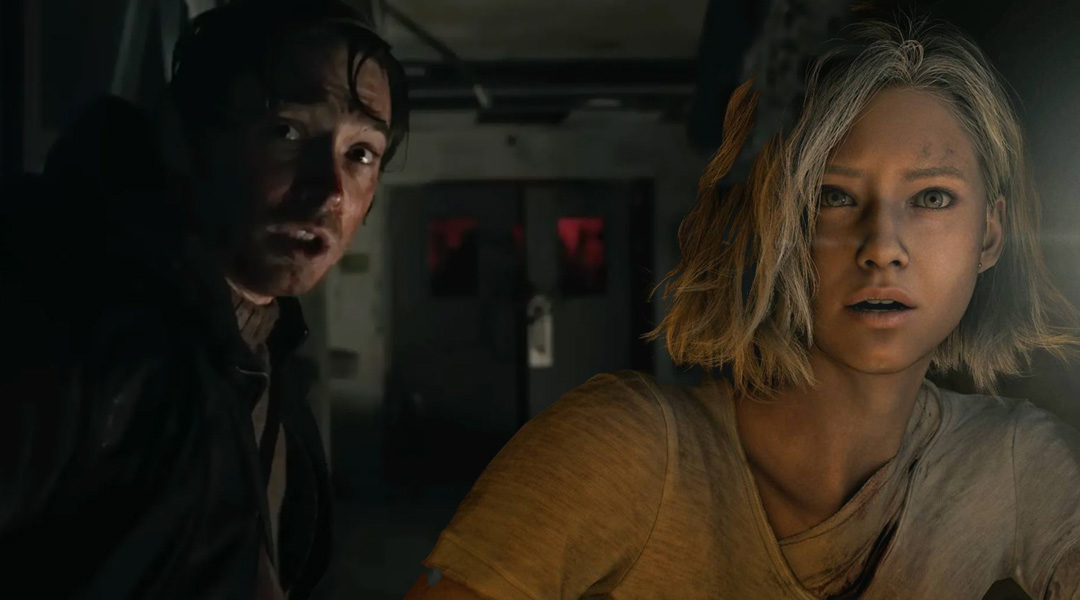
I had a great theater experience with Zach Cregger’s Resident Evil film adaptation on opening weekend. My audience was locked in. They yelled, groaned, and laughed at all the right places, feeling the tension and release as if we were one organism—a zombie tumbleweed, if you will. However, while we all laughed and left the theater with giant smiles, I was struck by how ultimately nihilistic Cregger’s Resident Evil movie was in comparison to the games.
Resident Evil games are full of untold horrors (well, mostly zombies), but they often star the same, do-good protagonists. The series is unique in how it has followed largely the same cast of characters for decades and seen them age. While some frequently recurring protagonists like Chris have paid lip service to burnout and disenchantment with their constant fight against monsters, the ship is always righted by the story’s end. Protagonists like Chris, Jill and Leon ultimately believe in the systems they’ve dedicated their lives to upholding and the general good of humanity. They are in it to save civilians, and while they do lose people more often than not, it’s not for lack of trying, and they’ll always try again.
This becomes a major, plainly stated theme in this year’s Resident Evil: Requiem. In Requiem, Leon returns for a fourth time (ninth if we count the animated films and tv show) and is now in his 50s with a terminal illness. In revisiting Raccoon City's rubble twenty years on, he comes to the conclusion that saving even one person makes the work worth it.1
Requiem’s dual stories of Leon and Grace, a new, younger co-protagonist, coalescence around the concept of “hope.” At first, Grace is the hope of our antagonists, believing she holds some sort of genetic secret that will unleash the final masterpiece of Umbrella’s long-dead founder, Oswell Spencer’s. In a Last Jedi-esque twist, we learn Grace has no special abilities. She was an orphan adopted by an aging Spencer facing mortality and the gravity of his legacy. He states in no uncertain terms that adopting a child is a gesture towards atonement and hope for a better future. Grace deduces that “hope” is the literal password for releasing his last work—not a final, terrible virus, but a vaccine to save Leon.
By contrast, hope is ultimately denied to the characters of Zach Cregger’s film. What few characters the protagonist, Bryan, encounters are dispatched quickly and horrifically, and he has no choice but to trudge on—or more accurately, run off screaming into the night. This is re-enforced whenever Bryan encounters a common narrative trope from the Resident Evil games, as it is almost always subverted to both comedic and horrific affect.
The scared little girl is a common sight in a Resident Evil game, and one our noble heroes would never abandon. Claire in Resident Evil 2 (1998), Barry in Revelations 2 (2015), and Grace in Requiem (2026) all underwent the ritual of finding and adopting their young charges. When Bryan encounters a girl cowering in the back of an abandoned RV, there’s an expectation she will accompany him for the rest of the film. Instead, her face splits open into a grotesque, one-eyed maw, and he has to shoot her. By contrast, even when a girl monstrously transforms in front of Leon, he can miraculously not “hit her vitals2” so they can cure her. Bryan is not afforded that luxury, because Bryan is not actually a Resident Evil hero.
There’s a moment when Bryan is searching for ammo in the farm house where he opens a door to reveal a classic typewriter. The typewriter of course is how players traditionally save their games in Resident Evil with the number of saves—their ink ribbons—being yet another commodity they have to track. Critically, the rooms that have typewriters are safe—enemies typically cannot enter, so players have time to catch their breath. In the film, the camera switches at this point to a first person perspective so we can see a cozy nook with a typewriter perfectly framed in the center, illuminated by moonlight as if to direct a player’s attention to an interactive object. The camera lingers long enough for the audience to laugh in recognition, but Bryan doesn’t ever enter the room. The room is not only not safe, but it’s inaccessible to him as a non-hero.
This concept crystalizes in one of the few quiet moments in the film, when Bryan finally has a moment to inspect his newly infected arm. Overcome, he breaks down and records a tearful voice message for his girlfriend. There are a few triumphant moments where it seems that he might get to deliver this message personally after all, but once he starts mutating in the lab, it is evident that this memo will not reach the girlfriend. Instead, it is exactly the kind of tragic note Leon might find on his journeys through Raccoon City. All this effort has amounted to is environmental storytelling in what will ultimately be someone else’s story.
There’s something really compelling about this approach to adaptation. On one hand, Bryan’s story is a faithful adaptation of the procedural, emergent stories players experience in the game—scrounging for supplies, celebrating near misses and miracle shots, even kiting enemies around a barrier to get away—but his journey ultimately ends with a voice memo before becoming a classic multi-eyed monstrosity. The games usually end with the player-character riding safely into the dawn of a new day, but the reality Cregger’s film posits is that most denizens of Raccoon City do not get to that sunrise, and we were naive to fantasize that we are somehow exceptional. It accurately adapts the feeling of playing Resident Evil with the reality check of how we would actually survive in a Resident Evil scenario—which is to say, we wouldn’t. Abandon all hope, ye who enter here. And twice I’ve entered here, my multiplex.